Sunday, July 8, 2018

Book review: Pies and Prejudice by Heather Vogel Frederick

The twenty-sixth book I read in 2018 was the fourth book in Heather Vogel Frederick's Mother-Daughter Book Club series, Pies and Prejudice.  The girls are entering ninth grade, and their book for the year (clearly) is Jane Austen's Pride and Prejudice. 

But the girls aren't all entering ninth grade together.  Jess already abandoned the public school last year when she moved into a boarding school dorm, despite living in the same town the school is in; this year, Emma and her family are spending the school year in Bath since her father sold the novel he'd been working on.  Technology to the rescue, as Mr. Wong hooks up videoconferencing equipment for book club meetings.

The Hawthornes work a house swap with a British family with two sons, one of whom is handsome and charming while the other is distant and arrogant ... and I'm sure you can see where this is going.  There's a lot of boyfriend stuff this time around, as Megan falls for Bingley, uh, Simon, Becca goes to the Spring Formal with Zach Norton, Jess and Darcy finally get together, Stewart breaks up with Emma, and the author rips off pays homage to The Cutting Edge with Cassidy and the Darcy-stand-in, Tristan.

Frederick sprinkles the background with Austen Easter eggs, like the choir director Mr. Elton, the teacher Ms. Bates, and Emma's Knightley-Martin School.  The rather ham-handed title is derived from a baking business the club begins to pay for an airline ticket for Emma to fly home for spring break (which, coincidentally, is the same week as spring break at Alcott High and Colonial Academy), which in turn follows a sudden and convenient passion to learn cake decorating on the part of Jess and her mom.  It's pretty out of left field.

The Sweet-Valleyism is a given with this series by now, but my main concern was mean-spirited actions of the girls seemingly being condoned by the author.  Megan finds her niche in high school by publishing an anonymous "What Not to Wear" blog, trashing the fashion choices of her schoolmates.  She is eventually found out, and her mom forces her to apologize; but she receives considerable positive affirmation for her exploits from a magazine publisher who implicitly tells her to wait until she's 18 and then she can make fun of others with impunity for a paycheck. 

Emma's father's novel (besides being awful -- Frederick really shouldn't have posted a supposed excerpt) contains thinly-disguised caricatures of people he knows, prompting a feud with Mrs. Chadwick, whose doppelganger is particularly unattractive.  (And I've read reviews of the series who point out that continually mocking a character for the size of her posterior is hardly a feminist undertaking.) 

And Emma herself has a story published in the Knightley-Martin school literary magazine mocking a group of girls at the school before flying back to the US consequence-free -- a public shaming for which her father and one of the girls' relatives congratulates her.  Emma (with Frederick) excuses herself with the assurance that no one but the girls being made fun of will know it's them and they deserve it, but given that the bad fairies in the story have the exact same nicknames as the four girls in real life, it's a ridiculous conclusion. 

For a series that has gone out of its way to redeem Becca Chadwick and Savannah Sinclair, it's petty to dump on Annabelle Fairfax and her satellites.  And for a series based on celebrating female characters, to condone mockery of (other) female characters for their weight and fashion choices is backwards. 

Wednesday, July 4, 2018

Book review: Game On! by Dustin Hansen

The twenty-fifth book I read in 2018 was Game On!: Video Game History from Pong and Pac-Man to Mario, Minecraft, and More by Dustin Hansen.  I was the last reader in the household to read this book, as the kids found it at Half-Price Books and Tommy read it after them.

Unlike Tristan Donovan's subtitle, this one has an accurate range: Hansen starts with Pong in 1972 and works his way chronologically through important, innovative and successful games, ending with Overwatch in 2016, the book's publication date.  The explanation of why I was the last in the family to read this book might lie in the confession of how many of these games I haven't played.  Pong, yes, on the Atari 2600; Pac-Man, Donkey Kong, and E.T.  the Extra-Terrestrial, ditto.  I never played Zork, although I did play a later text-based game by Infocom, The Hitchhiker's Guide to the Galaxy.  Tetris, yes; Myst, yes.  Pokemon Yellow I played a few times on my nephew's GameBoy.  And Wii Sports.  That's it.  Eight out of thirty-nine "games that shaped us all," in the author's words.

While my experience with the particular games Hansen singles out obviously skews early (and Atari-centric), I have a hard time accepting the validity of any list of great video games that doesn't include Baldur's Gate.  To me, the author's list is console-heavy.  In completing his history up to the present day, he sacrifices a bit of perspective.  Will Angry Birds and Overwatch really go down in history with similar impact to Pong and Pac-Man?  Who's to say?

The text is explicitly aimed at kids -- the epilogue says that "today's gamers -- that means you, gamer -- are going to school to become the game developers of tomorrow," and a discussion of video game ratings begins to describe the content of Adults-Only-rated games and breaks off, "...well, how about we cover that when you're an adult." -- despite the author's celebration of games like Farmville expanding the definition of gamers beyond adolescence.  As such (and probably because Hansen works in the industry and doesn't want to burn bridges), the text is very rah-rah, with no negative details about anyone or anything mentioned.  For example, Toys for Bob, the studio that would eventually create Skylanders, had been focused on making video games of kids' movies, but "[m]ovie games started to get a bad reputation.  Gamers were tired of buying games based on movies they loved, only to be disappointed when the games didn't deliver the experience they expected."  Was Toys for Bob putting out uninspired, cash-grab games?  You'll never know from this book.

Tristan Donovan, of It's All a Game, has a book of his own out on video game history.  Hansen's book makes me want to read it to see some of the warts he has undoubtedly excised.

Saturday, June 30, 2018

Book review: Jane Austen Cover to Cover by Margaret C. Sullivan

The twenty-fourth book I read in 2018 was Jane Austen Cover to Cover: 200 Years of Classic Covers by Margaret C. Sullivan.  This is a lovely little coffee table book with full-color images of the covers of various editions of Austen's novels over the years, from first editions through movie tie-ins to mash-ups.  Some are lovely; some are laughable; and a great multitude are anachronistic, particularly when it comes to fashion and the current standard of beauty.

Some gleanings:

The famed Peacock Edition of Pride and Prejudice was published in 1894 and was so iconic that, despite peacocks not being mentioned in the text, many later covers revert to the theme.

Northanger Abbey wins the category of most inappropriate cover art, with many illustrators and marketers taking at face value the Gothic trappings Austen was parodying.  (Sample cover blurb from the 1965 Paperback Library edition: "The terror of Northanger Abbey had no name, no shape -- yet it menaced Catherine Morland in the dead of night!")

There is an e-book which manages to misspell both the title (Sense and Sensibility) and the author's name on the cover.

Oldcastle Books published a faux-pulp edition of Pride & Prejudice, featuring a Colin Firth portrait with a cigarette dangling from the corner of his mouth and the cover blurb "Lock Up Your Daughters... Darcy's In Town!"

This book definitely stirred up my never-very-dormant collector's vibe.  One disappointment, however, is that Sullivan often discusses the interior illustrations of a particular edition but provides no images.  I suspect that the rights might have been expensive and/or unavailable, but I'd frankly rather she didn't bring them up than talk about them and leave me hanging.

Thursday, June 28, 2018

Book review: Empire by Steven Saylor

The twenty-third book I read in 2018 was Empire: The Novel of Imperial Rome by Steven Saylor.  The sequel to his Roma, it picks up with the Pinarius family where the previous book left off, in the reign of Augustus.

Despite being a thicker book than its predecessor, Empire covers only 127 years, whereas Roma encompassed a millennium.  This is, in large part, due to the much wider historical basis for the early years of the empire versus the comparative lack of documentation for the founding, kings, and early republic.  It also necessarily narrows the focus on the Pinarius family to four generations.  In theory, this ought to allow for more characterization, but the Pinarii are a literary conceit: they exist as witnesses to history rather than as active participants.

Unfortunately, Saylor's perfunctory treatment of female characters persists, including one who turns out to be more literally a Woman in a Refrigerator than one would believe possible so many centuries before household appliances.  More common are women who simply drop out of the narrative, never to be mentioned again, or die off-screen.  A characteristic examples is the final Pinarius wife of the book, Apollodora, who is introduced as the object of the protagonist's desire, serves the matrimonial purpose of allying the fictional protagonist with a historical personage, gives birth to a son and heir (but no other children, despite the couple's sex life being presented as vigorous), pops into the plot again when her (historical) father is put to death, and then ... nothing.  Her last appearance in the book is to silently nod to a comment her husband makes and then go off to bed, unallowed by the author even to express an anodyne opinion on the events of the day.  

Empire suffers from the defect, common in quasi-educational fiction, of having one character explain to another events with which he should already be familiar for the benefit of the reader ("As you know, Marcus....").  There also seem to be more small errors in this book than in its predecessor: missing prepositions, "tale" in place of "tail," etc.  

My other complaint is that Saylor is perhaps too trusting of contemporary historical accounts; if Suetonius or Plutarch or someone said that this or that out-of-favor late emperor performed a particular feat of debauchery, by golly, it must be so (not to mention the novelist's benefit that it makes for racy purple prose).  In Roma, Saylor demytholigized the legend of Hercules and Cacus; it's disappointing that here he reports on Apollonius of Tyana at breathless face value.

Monday, June 25, 2018

Church camp 2018


I have two, TWO, campers at youth camp this year!  (Insert Count Von Count cackle with impeccably-timed lightning flash.)  I have already learned that the house makes all kinds of noises that are not usually audible over the sounds of two children.

Wednesday, June 6, 2018

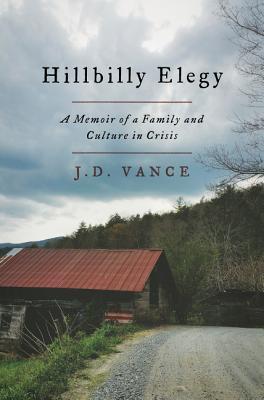
Book review: Hillbilly Elegy by J. D. Vance

The twenty-second book I read in 2018 was Hillbilly Elegy:  A Memoir of a Family and Culture in Crisis by J. D. Vance.  The book caused a big stir when it was published in 2016, and it's been on my radar for a while; but I only now got around to reading it.

Vance tells the story of his own dysfunctional family, which is not at all unusual in the memoir genre, but he also claims, as indicated by the subtitle, that, contra Anna Karenina, that his family was unhappy not in its own way but in a way that indicts the culture in which he grew up: in his case, diaspora Appalachians. 

While media attention around the book has focused on Vance's "up by the bootstraps" ending, the vast majority of this book deals with the dysfunction which he has (so far) escaped.  The meat of the story begins with his Mamaw and Papaw leaving Kentucky for a shot at a better life in Ohio.  His grandparents' marriage was intensely dysfunctional itself during their childrearing years, but by the time J. D. came along, they had reconciled into the only safe haven he would know as a boy.  His mother, herself traumatized by the violence of her childhood home, descended into addiction, serial monogamy, and worse, leaving J. D. and his older sister to depend on their grandparents and each other.

The first thing I must say about this book is that the language is vile.  To the author, it may be unremarkable: he emphasizes that his family, especially his beloved Mamaw, was unusually vulgar, and he went from there into the Marines, where one expects that the language is hardly suitable for children.  As a professional, however, Vance might realize that such language is inappropriate in some instances -- I doubt he uses it with a new client -- and in my opinion, the book is harmed by his choice to use it, not only in direct quotation but in his own narrative voice.  While his story is moving and his analysis thought-provoking, the incessant obscenity prevents me from recommending the book to people I otherwise might.  (See The Martian, which eventually got a bowdlerized classroom edition.)

The book aspires (I think) to be heart-warming and life-affirming, but some aspects of it leave me troubled rather than reassured about J. D.  His affection for his grandparents is understandable but seems to lead him to condone actions that seem to me reprehensible.  "Mamaw did it, and everything worked out," is not equivalent to "Mamaw acted wisely and in the best interests of the children involved."  Many of the situations described in the book could just as easily have ended in tragedy as triumph and, in other families, have.  In addition, I find his descriptions of the networking and connections that reaped him great rewards once he got to Yale Law to be revolting, verifying that it's not what you are capable of but who you know that weighs more heavily on the scales of success: once you are accepted into Yale Law (and learn which utensils to use in which order at a fancy restaurant), the rest of your professional life is set, which is nice unless you're not fortunate enough to be accepted into Yale Law. 

Monday, June 4, 2018

Book review: It's All a Game by Tristan Donovan

The twenty-first book I read in 2018 was It's All a Game: The History of Board Games from Monopoly to Settlers of Catan by Tristan Donovan.  The subtitle is misleading, as the overview actually starts well before Monopoly with games of ancient Egypt and Mesopotamia.  From there it travels through chess and backgammon before jumping ahead to the game of Life (which admittedly has a longer pedigree than I'd assumed), Monopoly, Risk, Clue, Scrabble, Mouse Trap, Twister, the Ungame, Trivial Pursuit, Pandemic, and (as advertised) Settlers of Catan, with a pair of digressions on the use of board games to help POWs escape during WWII and the rise of AIs in chess and go.

There are a lot of interesting facts on parade here, including what exactly a "rook" is, how many games got their start in Canada before crossing the southern border, and exactly how convoluted the origin story of Monopoly is.  The book could have used another editing run: Dungeons & Dragons co-creator Dave Arneson is consistently referred to as Dave Arenson, and the culprit in Clue is dubbed a "gentile" rather than genteel British murderer.  Still, this was an interesting read.  I learned some things and made a mental note of a few games I might pick up for our family to enjoy.

Blog Archive