The third book I read in 2020 is The Essential It's a Wonderful Life: A Scene-by-Scene Guide to the Classic Film by Michael Willian. "It's a Wonderful Life" is one of our favorite Christmas movies, and this book walks through the film scene by scene, giving behind-the-scenes information and pointing out small mistakes. There is also an extensive quiz to test your knowledge of the film.
If you enjoy "It's a Wonderful Life," you will enjoy reading this book.
Tuesday, February 18, 2020
Wednesday, February 12, 2020
Book review: The Beginning of Politics by Moshe Halbertal and Stephen Holmes
The second book I read in 2020 is The Beginning of Politics: Power in the Biblical Book of Samuel by Moshe Halbertal and Stephen Holmes. Halbertal and Holmes address First and Second Samuel (and the first two chapters of First Kings) as literature, casting their anonymous author as a proto-Machiavelli, discussing the Israelite monarchy from the perspective of realpolitik.
The authors emphasize the unique quality of kingship in Israel: unlike virtually all other societies of the time, the origin of the monarchy isn't shrouded in myth; neither is it divinely ordained. On the contrary, the book of Samuel presents a society that did not have a king and presents a mundane and historical account of how it came to have one, actually against the advice of the deity.
Halbertal and Holmes's assertion is that the very concept of politics was birthed when the people went to Samuel and demanded a king. Surrounded by societies which declared that "the king is a God" and rejecting Judges's assertion, mostly explicitly stated by Gideon that "God is the king," the Israelites invent a third concept: "the king is not a God." This revolutionary statement, no less than the Roman's rejection of Tarquin and invention of a res publica, laid the foundation for the modern world.
The author of Samuel presents an honest, demythologized account of the beginning of the monarchy which depicts, in Halbertal and Holmes's minds, the necessary evils endemic to all politics, particularly the reversal of means and ends: sovereign power is necessary as a means to accomplish the end of protecting the nation but ends up being an end in its own right to those desperate to hold on to that sovereign power (Saul) or pass it on undiminished to their chosen heirs (David).
The authors emphasize the unique quality of kingship in Israel: unlike virtually all other societies of the time, the origin of the monarchy isn't shrouded in myth; neither is it divinely ordained. On the contrary, the book of Samuel presents a society that did not have a king and presents a mundane and historical account of how it came to have one, actually against the advice of the deity.
"In the Samuel narrative, both the shift away from the political theology of the Book of Judges and the initial appearance of monarchy in Israel are presented as events occurring in human history. They do not belong to the mythic past. The biblical king, enthroned before our eyes, is a thoroughly human being, not a God. He is not a pillar of the cosmic order. He plays a negligible and wholly dispensable role in religious ritual, does not convey divine commands to his people, does not maintain the order of nature, and is not the prime lawgiver."
Halbertal and Holmes's assertion is that the very concept of politics was birthed when the people went to Samuel and demanded a king. Surrounded by societies which declared that "the king is a God" and rejecting Judges's assertion, mostly explicitly stated by Gideon that "God is the king," the Israelites invent a third concept: "the king is not a God." This revolutionary statement, no less than the Roman's rejection of Tarquin and invention of a res publica, laid the foundation for the modern world.
The author of Samuel presents an honest, demythologized account of the beginning of the monarchy which depicts, in Halbertal and Holmes's minds, the necessary evils endemic to all politics, particularly the reversal of means and ends: sovereign power is necessary as a means to accomplish the end of protecting the nation but ends up being an end in its own right to those desperate to hold on to that sovereign power (Saul) or pass it on undiminished to their chosen heirs (David).
Monday, January 27, 2020
Book review: The Idol of Our Age by Daniel J. Mahoney
The first book I read in 2020 is The Idol of Our Age: How the Religion of Humanity Subverts Christianity by Daniel J. Mahoney. The general premise of the book is that humanitarianism has become a secular religion which is not synonymous with Christianity. I had hoped that this book would give me a better vantage point on an issue I have had with recent books by Christian authors published by Christian imprints which seem to arrive at the same ends as secular publications; i.e., that Christians should work toward the betterment of vulnerable minorities' earthly lives.
Unfortunately, I was disappointed in this book. For one, it is quite dry and academic. It surveys selected writings by Orestes Brownson, Vladimir Soloviev, and Aleksandr Solzhenitsyn (favorably) and Pope Francis and Jurgen Habermas (unfavorably), but there is little if any argument why the former is better than the latter, save that the one agrees with the author and the other doesn't.
In addition, Mahoney fails to follow through on his subtitle. How does humanitarianism subvert Christianity? It's not until page 68 that he gets around to hinting at an answer. I believe his point is that humanitarianism serves as a demythologized Christianity, leading culture to identify Christianity with "doing good" and, thus, ultimately to discard the actual beliefs of Christianity as unnecessary, irrelevant, and, in the modern mind, sometimes downright antithetical to the real work of Christianity, which is to make the world a better place. I think this is what he's saying -- but it would be really great if the point promised in the subtitle received more than a glancing reference halfway through the book.
What vaguely justifies the price of purchase is Mahoney's reprint in the appendix of "The Humanitarian versus the Religious Attitude," a 1944 essay by Aurel Kolnai which served as an intellectual jumping-off point for the book and thus should really have been printed first with Mahoney's amplifications as an appendix. Kolnai, while no less academic in prose, does provide distinctions between the two attitudes of the title and draws out the possible implications for societies based on one over and against the other. It is interesting that, at the time Kolnai was writing, he saw the humanitarian society tending toward the general welfare of the majority over and against individual rights. Today, of course, the rights of the distinct individual reign supreme -- but it's unsurprising, given the historical trends on display in 1944, that Kolnai saw the future as collectivism, and he does point out that both tendencies to both extremes are compatible with humanitarianism, that is, with making humanity and its perceived needs, whether collectively or individually, the basis for moral judgments.
It's a shame that this book isn't more accessible and clear, as I believe the distinction between humanitarian orthopraxy and religious orthodoxy is important to observers of society today. It's an important concept to keep in mind, along with Will Herberg's Protestant Catholic Jew, in relation to statistics showing the "decline" of religious faith since the mid-twentieth century. For many in the 1950s, memberships in a religious institution had to do with "doing good" more than with supernatural beliefs (witness Dick Van Dyke's abandonment of organized religion because his church wasn't progressive enough in its policies); it's not clear that statistics of religious decline measure much more than people finding other socially-endorsed methods of charity without a supernatural belief system tacked on.
The world is not lacking for those who identify religion with its material outcomes on human lives. From Felix Adler, the Reformed Jew who "called for an end to the trappings of ritual and theology and for a universal religion steeped in morality" in 1874 to Jim Wallis, founder of Sojourners magazine, who says "that for him, being a Christian means taking care of the poor, immigrants, and other marginalized communities." This is how Christianity (or Judaism) is subverted, by making them about what people do rather than about what God does.
Unfortunately, I was disappointed in this book. For one, it is quite dry and academic. It surveys selected writings by Orestes Brownson, Vladimir Soloviev, and Aleksandr Solzhenitsyn (favorably) and Pope Francis and Jurgen Habermas (unfavorably), but there is little if any argument why the former is better than the latter, save that the one agrees with the author and the other doesn't.
In addition, Mahoney fails to follow through on his subtitle. How does humanitarianism subvert Christianity? It's not until page 68 that he gets around to hinting at an answer. I believe his point is that humanitarianism serves as a demythologized Christianity, leading culture to identify Christianity with "doing good" and, thus, ultimately to discard the actual beliefs of Christianity as unnecessary, irrelevant, and, in the modern mind, sometimes downright antithetical to the real work of Christianity, which is to make the world a better place. I think this is what he's saying -- but it would be really great if the point promised in the subtitle received more than a glancing reference halfway through the book.
What vaguely justifies the price of purchase is Mahoney's reprint in the appendix of "The Humanitarian versus the Religious Attitude," a 1944 essay by Aurel Kolnai which served as an intellectual jumping-off point for the book and thus should really have been printed first with Mahoney's amplifications as an appendix. Kolnai, while no less academic in prose, does provide distinctions between the two attitudes of the title and draws out the possible implications for societies based on one over and against the other. It is interesting that, at the time Kolnai was writing, he saw the humanitarian society tending toward the general welfare of the majority over and against individual rights. Today, of course, the rights of the distinct individual reign supreme -- but it's unsurprising, given the historical trends on display in 1944, that Kolnai saw the future as collectivism, and he does point out that both tendencies to both extremes are compatible with humanitarianism, that is, with making humanity and its perceived needs, whether collectively or individually, the basis for moral judgments.
It's a shame that this book isn't more accessible and clear, as I believe the distinction between humanitarian orthopraxy and religious orthodoxy is important to observers of society today. It's an important concept to keep in mind, along with Will Herberg's Protestant Catholic Jew, in relation to statistics showing the "decline" of religious faith since the mid-twentieth century. For many in the 1950s, memberships in a religious institution had to do with "doing good" more than with supernatural beliefs (witness Dick Van Dyke's abandonment of organized religion because his church wasn't progressive enough in its policies); it's not clear that statistics of religious decline measure much more than people finding other socially-endorsed methods of charity without a supernatural belief system tacked on.
The world is not lacking for those who identify religion with its material outcomes on human lives. From Felix Adler, the Reformed Jew who "called for an end to the trappings of ritual and theology and for a universal religion steeped in morality" in 1874 to Jim Wallis, founder of Sojourners magazine, who says "that for him, being a Christian means taking care of the poor, immigrants, and other marginalized communities." This is how Christianity (or Judaism) is subverted, by making them about what people do rather than about what God does.
Thursday, December 19, 2019
The Anti-Family Culture
Motherhood seems to be having an anti-moment in popular culture this holiday season. I was struck by this sentiment expressed by Jessica Hausner, director of a new woman-centric horror movie, in last Thursday's Wall Street Journal: "We're still living in a society where we all expect a mother to love her child, more than her job.... I think this needs to be adjusted."
My first thought was, "Yes, of course a mother should love her child more than her job. How awful to think she might not."
My second thought was, "Why does gender come into this at all? Don't we also expect a father to love his child more than his job? If not, why all the furor that's been expended over workaholism, deadbeat dads, various Fatherhood movements?"
My third thought was, "Wait, this sounds familiar...." Because I had just read a review of another current movie, starring two of the hottest stars in Hollywood, that claimed the movie expressed the same argument: "...the only way “equality” can work is if both parents can pursue their respective career ambitions, no matter the fallout."
And I had also just read a review of an Emmy-winning TV show, in which the main character tearfully proclaims in divorce court, "I just can't be a wife right now."
In both movie and television show, a married couple with small child(ren) amicably divorce so that the woman can pursue her career. Which I guess can be seen as believable in the short term, if you're a (checks fictional characters in question) research geneticist, actress/director, or stand-up comedian. But that's definitely the 1% of women. What if, instead, you're the nanny, school teacher, or day care worker whose job is to care for the children the 1% are too important and self-actualized to care for? Are you then supposed to love your job (rich people's children) more than your own children?
Or, at some point, somewhere far enough down the socio-economic ladder, is it okay for a woman to enjoy her family more than her job? Or, for that matter, a man?
My first thought was, "Yes, of course a mother should love her child more than her job. How awful to think she might not."
My second thought was, "Why does gender come into this at all? Don't we also expect a father to love his child more than his job? If not, why all the furor that's been expended over workaholism, deadbeat dads, various Fatherhood movements?"
My third thought was, "Wait, this sounds familiar...." Because I had just read a review of another current movie, starring two of the hottest stars in Hollywood, that claimed the movie expressed the same argument: "...the only way “equality” can work is if both parents can pursue their respective career ambitions, no matter the fallout."
And I had also just read a review of an Emmy-winning TV show, in which the main character tearfully proclaims in divorce court, "I just can't be a wife right now."
In both movie and television show, a married couple with small child(ren) amicably divorce so that the woman can pursue her career. Which I guess can be seen as believable in the short term, if you're a (checks fictional characters in question) research geneticist, actress/director, or stand-up comedian. But that's definitely the 1% of women. What if, instead, you're the nanny, school teacher, or day care worker whose job is to care for the children the 1% are too important and self-actualized to care for? Are you then supposed to love your job (rich people's children) more than your own children?
Or, at some point, somewhere far enough down the socio-economic ladder, is it okay for a woman to enjoy her family more than her job? Or, for that matter, a man?
Monday, April 22, 2019
On the international beat
A couple of items that grabbed my attention in the news today:
- For those who say one man can't make a difference, "since [Pablo] Esobar's death [in 1993], the homicide rate in Medellin has dropped 90 percent." Source: World Magazine April 27, "Mountain Movers"
- Following the Easter bombings, "[t]he Archbishop of Colomba, Cardinal Malcolm Ranjith, called on Sri Lanka's government to 'mercilessly' punish those responsible 'because only animals can behave like that.'" Undoubtedly echoing Christ's words on the cross, "Father, mercilessly punish them because only animals can behave like that." While making allowances for the heat of the moment, I can only hope that he's going to look back on that statement someday and cringe. Source: AP
Monday, April 15, 2019
Book review: The King of Attolia by Megan Whalen Turner
The twenty-second book I read in 2019 was The King of Attolia, the third book in Megan Whalen Turner's Queen's Thief series. One sometimes hears it said of a book that the reader "couldn't put it down." That is very nearly literally true of this book. I began reading it last night, picked it up again this morning, and had to force myself to put it down long enough to go the grocery store and various other things I had to get done today. I just wanted to keep reading and find out what happens!
By this point in the series, I have learned enough to trust that Eugenides has a plan and is on top of things, no matter what my appear to be happening around him, but it's still exhilarating simply to find out exactly how far ahead of the game he is and how he is going to triumph.
Wednesday, April 3, 2019
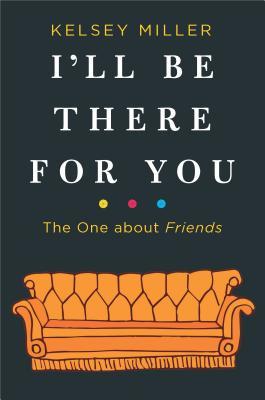
Book review: I'll Be There for You by Kelsey Miller
The eighteenth book I read in 2019 was I'll Be There for You: The One about Friends by Kelsey Miller. The book is, as advertised, a look back at the hit TV show.
Parts of it were fun, like information about the auditions and who might have gotten the iconic roles. (At one point, it was conceivable it could have been a Facts of Life reunion, with Jo as Monica and Blair as Rachel.) Unfortunately, after the first season or two, Miller stops mentioning specific episodes and moments and breezes over most of the on-screen product to focus on contract negotiations, which, yeah, I was there, and I know it was a big deal that the cast's solidarity wrung concessions from a network used to pitting actors against one another, but it's really not that interesting to revisit every time the actors demand a raise.
More frustrating, the author spends an inordinate number of chapters criticizing the twenty-five-year-old show for not being "woke" enough for modern sensibilities. SHUT UP, Millennials; go stab each other in the back for thoughtcrime and leave GenX alone.
Parts of it were fun, like information about the auditions and who might have gotten the iconic roles. (At one point, it was conceivable it could have been a Facts of Life reunion, with Jo as Monica and Blair as Rachel.) Unfortunately, after the first season or two, Miller stops mentioning specific episodes and moments and breezes over most of the on-screen product to focus on contract negotiations, which, yeah, I was there, and I know it was a big deal that the cast's solidarity wrung concessions from a network used to pitting actors against one another, but it's really not that interesting to revisit every time the actors demand a raise.
More frustrating, the author spends an inordinate number of chapters criticizing the twenty-five-year-old show for not being "woke" enough for modern sensibilities. SHUT UP, Millennials; go stab each other in the back for thoughtcrime and leave GenX alone.
Monday, April 1, 2019
Book review: Outer Order, Inner Calm by Gretchen Rubin
The seventeenth book I read in 2019 was Outer Order, Inner Calm: Declutter and Organize to Make More Room for Happiness by Gretchen Rubin. This book has the same chunky size as Marie Kondo's books but less content, larger print, and more white space. It's less instructional and more aspirational, a sort of decluttering devotional with bite-sized chunks of advice and inspiration.
Some of Rubin's aphorisms are remarkably catchy. I find myself wishing for Joanna-Gaines-style wall-art of a few of them, a visual reminder that's certainly more practical than a big cursive "EAT" in the kitchen.
There's very little how-to in this book, but I don't hold that against it. If you want a step-by-step plan, there's KonMari or Joshua Becker. Rubin is more of a life coach, reminding you why you're doing what you're doing. On the other hand, her three questions: "Do I use it? Do I need it? Do I love it?" inarguably offer more practical advice than Marie Kondo's "Does it spark joy?" I seriously doubt brooms and toilet plungers spark joy in anyone, but you shouldn't throw them out either.
Some of Rubin's aphorisms are remarkably catchy. I find myself wishing for Joanna-Gaines-style wall-art of a few of them, a visual reminder that's certainly more practical than a big cursive "EAT" in the kitchen.
There's very little how-to in this book, but I don't hold that against it. If you want a step-by-step plan, there's KonMari or Joshua Becker. Rubin is more of a life coach, reminding you why you're doing what you're doing. On the other hand, her three questions: "Do I use it? Do I need it? Do I love it?" inarguably offer more practical advice than Marie Kondo's "Does it spark joy?" I seriously doubt brooms and toilet plungers spark joy in anyone, but you shouldn't throw them out either.
Saturday, March 30, 2019
Book review: Why Children Matter by Douglas Wilson
The sixteenth book I read in 2019 was Why Children Matter by Douglas Wilson. This book is poorly titled; you wouldn't necessarily guess from the cover that it is a book on parenting.
There is little that is groundbreaking in this book, but Wilson's writing style is engaging and appealing. He writes from a counterculturally Christian perspective, in which the burden is not on the child to obey but on the parent to imitate Christ and so, like Paul, provide a model for the child to imitate. His message boils down to, "Love God, love what you are doing, and love the people God gave you to do it with."
Friday, January 4, 2019
New Year neologism
The lead headline in today's Dallas Morning News was Southwest Airlines' CEO Herb Kelleher's obituary. The first sentence is, "Herb Kelleher moved to Texas in 1962 with plans for a career in law." Only I read it as "career-in-law," then wondered, what's a career-in-law? I had time to decide it was when someone like Harry Bailey marries into a family business before I noticed there were no hyphens and it meant he was a lawyer.
Wednesday, November 21, 2018
Book review: The Buried Book by D. M. Pulley
The fifty-first book I read in 2018 was The Buried Book, D. M. Pulley's sophomore effort following up on The Dead Key. This book is set in 1952 in Detroit and deals with a nine-year-old boy whose mother goes missing under suspicious circumstances.
Pulley does a decent job telling the story in the voice of a rather naive and inexperienced boy. Unfortunately, the book of the title purports to be a diary Jasper's mother kept at the age of fourteen and is utterly unbelievable. Does even a talented author with an eye to a contract for a memoir write her diary in the voice of a first-person narrator, complete with dialogue and eloquent descriptions of the smallest minutiae of her day? For instance, would she, when describing arriving somewhere to make a delivery to a particular person, deliver verbatim the exact words spoken by the woman who tells her the man she's looking for is around back rather than just elide the scene with "He wasn't inside, but I found him around back?" When does the youngest of four children on a working farm with no electricity who constantly complains about how many chores she has to do in how little time find the time to write a secret diary in such painstaking detail?
Many of Pulley's set-pieces are evocative, particularly the brief sanctuary Jasper finds with a peep-show dancer and the school he attends while living on his uncle's farm, but the overarching mystery isn't terribly compelling. The writing is more impressive than the plotting in this book.
Pulley does a decent job telling the story in the voice of a rather naive and inexperienced boy. Unfortunately, the book of the title purports to be a diary Jasper's mother kept at the age of fourteen and is utterly unbelievable. Does even a talented author with an eye to a contract for a memoir write her diary in the voice of a first-person narrator, complete with dialogue and eloquent descriptions of the smallest minutiae of her day? For instance, would she, when describing arriving somewhere to make a delivery to a particular person, deliver verbatim the exact words spoken by the woman who tells her the man she's looking for is around back rather than just elide the scene with "He wasn't inside, but I found him around back?" When does the youngest of four children on a working farm with no electricity who constantly complains about how many chores she has to do in how little time find the time to write a secret diary in such painstaking detail?
Many of Pulley's set-pieces are evocative, particularly the brief sanctuary Jasper finds with a peep-show dancer and the school he attends while living on his uncle's farm, but the overarching mystery isn't terribly compelling. The writing is more impressive than the plotting in this book.
Book review: Notes from the Tilt-a-Whirl by N. D. Wilson
The fiftieth book I read in 2018 was Notes from the Tilt-a-Whirl: Wide-Eyed Wonder in God's Spoken World by N. D. Wilson. Wilson is best known for his children's books, particularly the 100 Cupboards trilogy, but this is non-fiction, a book-length essay describing his worldview.
What this book most approximates is God's monologue in Job, when challenged on the matter of his justice: an overwhelming catalog of things humans can't comprehend whose ultimate end is to emphasize the smallness of man and the brevity of life over and against the infinity of God and of, well, infinity.
Wilson gets it, in a way I have criticized other Christian books for settling for smaller ends, like racial reconciliation, nuclear disarmament, or girls' education. In the long run, all of us are mayflies: if one is crushed against a windshield rather than dying of natural causes at the end of its allotted lifespan ten minutes later, does it really matter? Which is better: to enter Hell with an advanced degree, or to enter Heaven illiterate? Which is not to say that the conditions experienced by most on earth are utterly irrelevant, but that people who profess to believe that everyone is stepping through a door either to eternal beatitude or eternal damnation ought, if they really examine themselves and their priorities, not to major on whether the waiting room everyone is in for a brief time has new carpeting and fresh paint.
What this book most approximates is God's monologue in Job, when challenged on the matter of his justice: an overwhelming catalog of things humans can't comprehend whose ultimate end is to emphasize the smallness of man and the brevity of life over and against the infinity of God and of, well, infinity.
Wilson gets it, in a way I have criticized other Christian books for settling for smaller ends, like racial reconciliation, nuclear disarmament, or girls' education. In the long run, all of us are mayflies: if one is crushed against a windshield rather than dying of natural causes at the end of its allotted lifespan ten minutes later, does it really matter? Which is better: to enter Hell with an advanced degree, or to enter Heaven illiterate? Which is not to say that the conditions experienced by most on earth are utterly irrelevant, but that people who profess to believe that everyone is stepping through a door either to eternal beatitude or eternal damnation ought, if they really examine themselves and their priorities, not to major on whether the waiting room everyone is in for a brief time has new carpeting and fresh paint.
Monday, November 19, 2018
Book review: A Stranger in Mayfair by Charles Finch
The forty-ninth book I read in 2018 was A Stranger in Mayfair, the fourth book in Charles Finch's Charles Lenox mystery series. Lenox is newly married to Lady Jane Grey and newly elected to Parliament, but despite the wishes of his new wife and new companions, he can't quit his hobby of amateur detecting. The mystery this time is the case of a murdered footman in the household of a fellow MP.
The mystery isn't quite up to snuff. As soon as the victim's room was searched in chapter nine, I knew who had done it and why, though it took Lenox all the way to the end of chapter forty-six to reach the same conclusion. Still, Lenox and his faithful servant/private secretary Graham are pleasant companions to spend the length of a book with, enough that I'm going to forgive the infelicities about to be discussed and snatch up installment five as soon as I can find it in the used book store:
Firstly, that Finch straight-facedly makes the ridiculous claim that whist was invented in London in the early 1860s, when anyone who has ever read Jane Austen knows that it was widely played everywhere in England by the turn of the nineteenth century. Wikipedia tells me that a book on the rules of whist was published at the club in question in 1862, but the game clearly existed prior to that.
Secondly, Lady Jane Pepper-Pottses it up out of the blue, whining about Lenox's detecting and the risks he runs while indulging the habit. Turning the new bride into a wet blanket about the very thing that makes the protagonist interesting to the reader is a misogynist stereotype.
Thirdly, Finch tries to be a little too coy and cutesy when Lenox buys a painting in Paris during his honeymoon.
And, finally, the B-plot in the novel centers around Lenox and Lady Jane's emotional decision whether or not to have children. As badly as writers of historical fiction want to believe it, people from different eras did not, in fact, under the funny clothes, behave just like modern Westerners. In the 1860s, conceiving a child was not a decision made by the couple, like buying a house or going on holiday; the only way to ensure that a married couple did not have children was abstinence or, alternatively, some not-terribly-reliable stabs at primitive birth control. Unless we are to believe that Lenox and Lady Jane have, during their honeymoon and upon their return to their joined homes, newly renovated to share a bedroom, not consummated their marriage, discussion after the fact is rather pointless. When Lady Jane (*dumb spoiler alert*) gifts Lenox a pair of puppies for them "to practice on" before deciding whether to have a child, it's the most Millennial thing she could possibly have done.
The mystery isn't quite up to snuff. As soon as the victim's room was searched in chapter nine, I knew who had done it and why, though it took Lenox all the way to the end of chapter forty-six to reach the same conclusion. Still, Lenox and his faithful servant/private secretary Graham are pleasant companions to spend the length of a book with, enough that I'm going to forgive the infelicities about to be discussed and snatch up installment five as soon as I can find it in the used book store:
Firstly, that Finch straight-facedly makes the ridiculous claim that whist was invented in London in the early 1860s, when anyone who has ever read Jane Austen knows that it was widely played everywhere in England by the turn of the nineteenth century. Wikipedia tells me that a book on the rules of whist was published at the club in question in 1862, but the game clearly existed prior to that.
Secondly, Lady Jane Pepper-Pottses it up out of the blue, whining about Lenox's detecting and the risks he runs while indulging the habit. Turning the new bride into a wet blanket about the very thing that makes the protagonist interesting to the reader is a misogynist stereotype.
Thirdly, Finch tries to be a little too coy and cutesy when Lenox buys a painting in Paris during his honeymoon.
"May I ask who painted it?" Graham asked.Oh, ha ha, he's a famous painter to the reader but the characters haven't heard of him yet! Except that A) if you're speaking aloud rather than writing, you don't have to tell the person you're talking to how to pronounce the name you just pronounced; and, B) Charles Lenox is supposedly well-read, well-educated, and widely traveled so there's no way he wouldn't know how to pronounce a French name.
"A chap called Monet," said Lenox. "Rhymes with bonnet, I think. I never heard of him myself."
And, finally, the B-plot in the novel centers around Lenox and Lady Jane's emotional decision whether or not to have children. As badly as writers of historical fiction want to believe it, people from different eras did not, in fact, under the funny clothes, behave just like modern Westerners. In the 1860s, conceiving a child was not a decision made by the couple, like buying a house or going on holiday; the only way to ensure that a married couple did not have children was abstinence or, alternatively, some not-terribly-reliable stabs at primitive birth control. Unless we are to believe that Lenox and Lady Jane have, during their honeymoon and upon their return to their joined homes, newly renovated to share a bedroom, not consummated their marriage, discussion after the fact is rather pointless. When Lady Jane (*dumb spoiler alert*) gifts Lenox a pair of puppies for them "to practice on" before deciding whether to have a child, it's the most Millennial thing she could possibly have done.
Saturday, November 17, 2018
Book review: Moneyball by Michael Lewis
The forty-eighth book I read in 2018 was Moneyball by Michael Lewis. I was fifteen years late to this best-seller, but that fact only made it clear how very wrong Lewis (and by extension, Billy Beane) was about pretty much everything. At the time, moneyball was supposed to be the future of baseball, as the Oakland As were supposedly right at the threshold of postseason success. Only, of course, the As have just kind of hung around at stasis since then. They do well for a low-budget team, but, as Beane himself is purported to assert in the book, no one is going to take him and his ideas seriously until he wins the World Series.
The success of the As alone might not have mattered so much as, when the book ends, the Red Sox are portrayed as converts to the moneyball cause and Beane acolytes J. P. Ricciardi has taken over as general manager for the Toronto Blue Jays. While the Red Sox have certainly enjoyed great success in the last fifteen years, they haven't done it by eschewing superstars and lowering the budget but rather by using sabermetrics to help them decide whom to give their huge contracts, and the Blue Jays haven't made a big smash and have since fired Ricciardi. What seemed like it was going to be a Big Deal in 2003 has, in fact, barely made a ripple in the business.
Reading with the benefit of hindsight really points out the limitations of Beane's approach, as he emphatically doesn't want Jeremy Bonderman (pitched in the World Series) or Scott Kazmir (three-time all-star and AL strikeouts leader in 2007), giving instead a list of his dream pitchers available in the 2002 draft which includes only Joe Blanton as a recognizable name. The overwhelming majority of the players which he believe sabermetrics had revealed to him as sure things never made it as far as Triple-A ball. Which just goes to show that maybe the numbers guy isn't actually that much more reliable than the old-school scouts whom Lewis's book denigrates.
The success of the As alone might not have mattered so much as, when the book ends, the Red Sox are portrayed as converts to the moneyball cause and Beane acolytes J. P. Ricciardi has taken over as general manager for the Toronto Blue Jays. While the Red Sox have certainly enjoyed great success in the last fifteen years, they haven't done it by eschewing superstars and lowering the budget but rather by using sabermetrics to help them decide whom to give their huge contracts, and the Blue Jays haven't made a big smash and have since fired Ricciardi. What seemed like it was going to be a Big Deal in 2003 has, in fact, barely made a ripple in the business.
Reading with the benefit of hindsight really points out the limitations of Beane's approach, as he emphatically doesn't want Jeremy Bonderman (pitched in the World Series) or Scott Kazmir (three-time all-star and AL strikeouts leader in 2007), giving instead a list of his dream pitchers available in the 2002 draft which includes only Joe Blanton as a recognizable name. The overwhelming majority of the players which he believe sabermetrics had revealed to him as sure things never made it as far as Triple-A ball. Which just goes to show that maybe the numbers guy isn't actually that much more reliable than the old-school scouts whom Lewis's book denigrates.
Friday, November 9, 2018
Book review: Goblins! by Richard Pett
The forty-seventh book I read in 2018 was Goblins!: The Adventure of the Wise Wench by Richard Pett. Pett is largely known as a creator of adventures and campaign settings for roleplaying games, and he is clearly influenced here by the goblins of Golarion, the setting of the Pathfinder RPG. Pett, in fact, wrote We Be Goblins!, a justly-famous adventure created for Free RPG Day in 2011, in which the players get to play, well, goblins (which usually play the role of easy-to-kill speedbumps in the way of player characters). Goblins! is basically We Be Goblins!: The Novel, which means it is a great deal of fun.
Goblins are violent, lazy, stupid, comically-incompetent creatures, with the possible exceptions of their females, some gifted specimens of which gain the role of Wise Wench, and Urgh Tricksy, sometimes known as Upside Down Face because his head is on the wrong way, with the mouth at the top and eyes at the bottom. Urgh is informed by the Wise Wench, who traffics with such gods as Lord Noc, Demigod of All Wind, and the dreaded Queen Quench, the Moist One, Queen of Boring, the Extinguisher of Bonfires, Bringer of Black, Lady Funless, Madam Dull-and-Damp, Mistress Tedium, the Insipid Crown Princess of Dreary, the Bore, and thus knows everything that is going to happen, that he is destined to become the village hero.
Along with his companion Sorry and Moaris the Minor Apocalypse, son of BigBad Chief Runty Miffed, a sort of goblin Lord Flashheart, Urgh sets forth on a quest to save the goblins of the forest from the invading giants, a species which has all the vices of goblins but is bigger -- and we all want to root for the underdog. While the heroes are off on their quest, the giants must be held off by the vain King Stormgrunties, his adviser Looti Lovelilips, Head Thug Durth Dimbits, and Master Whippet by such means as an iron hamster, a giant nose, and -- worst all all -- the king's own clever ideas.
Pett leaves the door wide open for a sequel -- indeed, the Wise Wench at one point confuses this quest with one that she and Urgh will be on in the future -- and if it comes to be, I will be first in line to read it.
Goblins are violent, lazy, stupid, comically-incompetent creatures, with the possible exceptions of their females, some gifted specimens of which gain the role of Wise Wench, and Urgh Tricksy, sometimes known as Upside Down Face because his head is on the wrong way, with the mouth at the top and eyes at the bottom. Urgh is informed by the Wise Wench, who traffics with such gods as Lord Noc, Demigod of All Wind, and the dreaded Queen Quench, the Moist One, Queen of Boring, the Extinguisher of Bonfires, Bringer of Black, Lady Funless, Madam Dull-and-Damp, Mistress Tedium, the Insipid Crown Princess of Dreary, the Bore, and thus knows everything that is going to happen, that he is destined to become the village hero.
Along with his companion Sorry and Moaris the Minor Apocalypse, son of BigBad Chief Runty Miffed, a sort of goblin Lord Flashheart, Urgh sets forth on a quest to save the goblins of the forest from the invading giants, a species which has all the vices of goblins but is bigger -- and we all want to root for the underdog. While the heroes are off on their quest, the giants must be held off by the vain King Stormgrunties, his adviser Looti Lovelilips, Head Thug Durth Dimbits, and Master Whippet by such means as an iron hamster, a giant nose, and -- worst all all -- the king's own clever ideas.
Pett leaves the door wide open for a sequel -- indeed, the Wise Wench at one point confuses this quest with one that she and Urgh will be on in the future -- and if it comes to be, I will be first in line to read it.
Monday, November 5, 2018
Book review: The Warner Boys by Curt and Ana Warner
The forty-sixth book I read in 2018 was The Warner Boys: Our Family's Story of Autism and Hope by Curt and Ana Warner. It was an Amazon First Reads book for the month of November, and when I saw it was by former NFL player Curt Warner, I thought of the Rams quarterback. That was Kurt Warner, however; Curt was from back in the '80's, before I had any interest in football.
Curt Warner was raised by his grandparents in West Virginia and took football as an opportunity not to become a coal miner. He went to Penn State and then was drafted, behind John Elway and Eric Dickerson, by the Seahawks. His life in football is covered in a few chapters, as the focus of this book is on his family, particularly on twin boys with autism.
Curt and his wife Ana alternate first-person accounts, with an interlude by their older son giving his perspective, detailing their family life. Despite the twins Austin and Christian's symptoms reading as textbook autism today, in the late 1990s, they boys went undiagnosed until they were five. Even after diagnosis, nothing about the situation got any easier; there was only a sense of relief that they could give the problem a name.
I'm sure it is not the Warner's intention, but this book left me horrified and exhausted. The twins were aggressive and destructive, harmful both to themselves and to others. They required constant supervision for years. They did structural damage to the family's home; then, when it had just been freshly remodeled to be more resilient, they started a fire which burned it down. While the narrative elicits greater sympathy for families dealing with autism, the relentless intensity of that life rendered me numb, not inspired to dive in and get involved but wanting to withdraw and hide from the gritty details revealed.
One thing that impressed me: Ana tells of desperate days as a stay-at-home mother, when she regularly called the prayer line of a local Christian radio station. When they hadn't heard from her in a couple of days, the people at the station actually called her to make sure she was all right. I have to admit, I've rolled my eyes at the "let us pray for your request" options I've heard on Christian radio, but may God bless those people for actually caring.
Curt Warner was raised by his grandparents in West Virginia and took football as an opportunity not to become a coal miner. He went to Penn State and then was drafted, behind John Elway and Eric Dickerson, by the Seahawks. His life in football is covered in a few chapters, as the focus of this book is on his family, particularly on twin boys with autism.
Curt and his wife Ana alternate first-person accounts, with an interlude by their older son giving his perspective, detailing their family life. Despite the twins Austin and Christian's symptoms reading as textbook autism today, in the late 1990s, they boys went undiagnosed until they were five. Even after diagnosis, nothing about the situation got any easier; there was only a sense of relief that they could give the problem a name.
I'm sure it is not the Warner's intention, but this book left me horrified and exhausted. The twins were aggressive and destructive, harmful both to themselves and to others. They required constant supervision for years. They did structural damage to the family's home; then, when it had just been freshly remodeled to be more resilient, they started a fire which burned it down. While the narrative elicits greater sympathy for families dealing with autism, the relentless intensity of that life rendered me numb, not inspired to dive in and get involved but wanting to withdraw and hide from the gritty details revealed.
One thing that impressed me: Ana tells of desperate days as a stay-at-home mother, when she regularly called the prayer line of a local Christian radio station. When they hadn't heard from her in a couple of days, the people at the station actually called her to make sure she was all right. I have to admit, I've rolled my eyes at the "let us pray for your request" options I've heard on Christian radio, but may God bless those people for actually caring.
Thursday, November 1, 2018
Book review: Killing Kryptonite by John Bevere
The forty-fifth book I read in 2018 was Killing Kryptonite: Destroy What Steals Your Strength by John Bevere. The first thing I'll point out is that Bever changes verb tenses between the title and subtitle, going from present participle to present imperative. The second thing I'll point out is that "killing kryptonite" is weird metaphor, since kryptonite is a mineral and can't be "killed." And if I'm getting this pedantic this early, you know this can't be a rave review.
I picked up this book because Bevere wrote one of my favorite Christian living book(let)s of all time, How to Respond When You Feel Mistreated. On that basis, when I saw this new release for $5 at the Mardel checkout, I was eager to give it a chance.
Unfortunately, the first part of this book is very weak, in my opinion. It is the author's assertion that the cessation of miracles in the church is due to sin in the body, that the acts of the apostles were meant to be the pattern of the church for the last two thousand years, and that the only reason that the shadow of a passing Christian falling on a sick person isn't instantly healing them is because the local church tolerates members who are unrepentant. His basis for this reasoning is 1 Corinthians 11:30, Paul's blaming physical illness on improper administration of the Lord's Supper. I find this a utopian argument, difficult to square with a more holistic view of the New Testament which emphasizes that believers should not be surprised by suffering. While Bevere disavows the prosperity gospel, his teaching, taken to its logical end, is little different.
Bevere's ultimate argument, that the church is weakened by the tolerance of sin in its membership, is convincing, and his concomitant condemnation of a cheap-grace gospel which depends on persuading people to "ask Jesus in their hearts" without an accompanying emphasis on repentance and a changed life, is worth pondering. A personal anecdote about the Dallas Cowboys is convicting. However, in my opinion, Bevere's argument is weakened by an overstatement of the potential consequences of following his advice.
I picked up this book because Bevere wrote one of my favorite Christian living book(let)s of all time, How to Respond When You Feel Mistreated. On that basis, when I saw this new release for $5 at the Mardel checkout, I was eager to give it a chance.
Unfortunately, the first part of this book is very weak, in my opinion. It is the author's assertion that the cessation of miracles in the church is due to sin in the body, that the acts of the apostles were meant to be the pattern of the church for the last two thousand years, and that the only reason that the shadow of a passing Christian falling on a sick person isn't instantly healing them is because the local church tolerates members who are unrepentant. His basis for this reasoning is 1 Corinthians 11:30, Paul's blaming physical illness on improper administration of the Lord's Supper. I find this a utopian argument, difficult to square with a more holistic view of the New Testament which emphasizes that believers should not be surprised by suffering. While Bevere disavows the prosperity gospel, his teaching, taken to its logical end, is little different.
Bevere's ultimate argument, that the church is weakened by the tolerance of sin in its membership, is convincing, and his concomitant condemnation of a cheap-grace gospel which depends on persuading people to "ask Jesus in their hearts" without an accompanying emphasis on repentance and a changed life, is worth pondering. A personal anecdote about the Dallas Cowboys is convicting. However, in my opinion, Bevere's argument is weakened by an overstatement of the potential consequences of following his advice.
Saturday, October 27, 2018
Book review: You Might Remember Me by Mike Thomas
The forty-fourth book I read in 2018 was You Might Remember Me: The Life and Times of Phil Hartman by Mike Thomas. Phil Hartman is largely known for four things: Saturday Night Live, The Simpsons, NewsRadio, and his murder at the hands of his wife in 1998 at the age of fifty.
Unfortunately, I have found that most (auto)biographies I have read leave me with a worse opinion of their subjects than I held in blissful ignorance. (See: Van Dyke, Dick and Schulz, Charles.) Hartman is no exception. He was born in small-town Canada, but a trip to the Rose Bowl infected his parents with the Southern California dream, where they determined to relocate their family as soon as possible. One can't help but question whether staying in Canada might not have resulted in a better outcome for their children, though it may have robbed television audiences of Phil's unquestionable comedic talent, as Phil and at least one brother became enthusiastic partakers of the 1960s celebrity culture of sex, drugs, and rock'n'roll.
The Hartmanns (a numerology-influenced Phil dropped the extra N for better karma) were a Catholic family with the multiple siblings that implies, one of whom was severely disabled. It is unclear whether it is Phil or his biographer or both that blamed his disabled sister for robbing him of the parental attention he rightfully deserved, but it's an unattractive sentiment poorly expressed. Phil's distant and unsuccessful relationships with three wives likewise indicate an inability to connect and empathize with other human beings when it's inconvenient or upsetting, and his complaint about the "trailer parks across America" which, in preferring the Brett Butler family sitcom Grace Under Fire over the urban singles workplace comedy NewsRadio, denied him the success he felt was his due, displays a contempt for the very audience he hoped to win over. (Full disclosure: I have watched and enjoyed both.)
In the end, of course, the story is a tragedy, not only for Phil and his fans but for his wife and murderer Brynn, whose motivations and mental state will never be fully understood but whose subsequent remorse and suicide robbed her children of both parents. The final fifty pages of the narrative deal with the last day of Phil's life and the aftermath of the murder in excruciating detail; if you remember where you were when you heard the news, the walkthrough will answer as many questions as are answerable about what exactly happened while leaving you with the somewhat ghoulish feeling of being a rubbernecker at a crime scene.
Unfortunately, I have found that most (auto)biographies I have read leave me with a worse opinion of their subjects than I held in blissful ignorance. (See: Van Dyke, Dick and Schulz, Charles.) Hartman is no exception. He was born in small-town Canada, but a trip to the Rose Bowl infected his parents with the Southern California dream, where they determined to relocate their family as soon as possible. One can't help but question whether staying in Canada might not have resulted in a better outcome for their children, though it may have robbed television audiences of Phil's unquestionable comedic talent, as Phil and at least one brother became enthusiastic partakers of the 1960s celebrity culture of sex, drugs, and rock'n'roll.
The Hartmanns (a numerology-influenced Phil dropped the extra N for better karma) were a Catholic family with the multiple siblings that implies, one of whom was severely disabled. It is unclear whether it is Phil or his biographer or both that blamed his disabled sister for robbing him of the parental attention he rightfully deserved, but it's an unattractive sentiment poorly expressed. Phil's distant and unsuccessful relationships with three wives likewise indicate an inability to connect and empathize with other human beings when it's inconvenient or upsetting, and his complaint about the "trailer parks across America" which, in preferring the Brett Butler family sitcom Grace Under Fire over the urban singles workplace comedy NewsRadio, denied him the success he felt was his due, displays a contempt for the very audience he hoped to win over. (Full disclosure: I have watched and enjoyed both.)
In the end, of course, the story is a tragedy, not only for Phil and his fans but for his wife and murderer Brynn, whose motivations and mental state will never be fully understood but whose subsequent remorse and suicide robbed her children of both parents. The final fifty pages of the narrative deal with the last day of Phil's life and the aftermath of the murder in excruciating detail; if you remember where you were when you heard the news, the walkthrough will answer as many questions as are answerable about what exactly happened while leaving you with the somewhat ghoulish feeling of being a rubbernecker at a crime scene.
Thursday, October 25, 2018
Book review: Journey to Munich by Jacqueline Winspear
The forty-third book I read in 2018 was the 12th Maisie Dobbs book by Jacqueline Winspear, Journey to Munich. As indicated by the cover art, Winspear is finally beginning to leave World War I behind and move on to World War II.
Maisie has at last quit moping over the deaths of her not-very-lamented late husband and unborn child and returned to England, where recurring characters Robbie MacFarlane and Francesca Thomas recruit and train her for an undercover mission: entering Nazi Germany in disguise to retrieve a British businessman consigned to Dachau. Concurrently (because we must have a B-plot), she is retained by the hated Otterburn family to retrieve the daughter Maisie blames for her husband's death from a dissolute life in Munich.
The Nazi angle adds a much needed sense of danger and moral purpose to the series, which has tended to focus too much on the regrets of the past. Of course Maisie actually meets Hitler, and of course she is prescient enough to discern the Jewish heritage of a British subject in the diplomatic service and urge his immediate departure, but the Mary Sueness of Maisie takes a back seat to the actual stakes of the action in this installment. It's a shame, given both her and her author's success in the spy genre, that Maisie ends the book by swearing off further involvement with the secret service, but we can hope that patriotism will persuade her otherwise before VE Day.
Maisie has at last quit moping over the deaths of her not-very-lamented late husband and unborn child and returned to England, where recurring characters Robbie MacFarlane and Francesca Thomas recruit and train her for an undercover mission: entering Nazi Germany in disguise to retrieve a British businessman consigned to Dachau. Concurrently (because we must have a B-plot), she is retained by the hated Otterburn family to retrieve the daughter Maisie blames for her husband's death from a dissolute life in Munich.
The Nazi angle adds a much needed sense of danger and moral purpose to the series, which has tended to focus too much on the regrets of the past. Of course Maisie actually meets Hitler, and of course she is prescient enough to discern the Jewish heritage of a British subject in the diplomatic service and urge his immediate departure, but the Mary Sueness of Maisie takes a back seat to the actual stakes of the action in this installment. It's a shame, given both her and her author's success in the spy genre, that Maisie ends the book by swearing off further involvement with the secret service, but we can hope that patriotism will persuade her otherwise before VE Day.
Friday, September 14, 2018
Book review: Ordeal by Innocence by Agatha Christie
The thirty-sixth book I read in 2018 was Ordeal by Innocence by Agatha Christie. Amazon is doing a series of it (apparently with a different murderer), so I thought I'd see what the original was like before perhaps looking into the (much more action-packed, judging by the trailer) update.
In one sense, I enjoyed this book a bit more than the other Christie books I've read. It was definitely a page-turner as I was curious about the solution to the crime. But the most awful biases against adoption are on display in this book! From statements by a character presented as a well-meaning authority that Rachel Argyle wasn't "really" her children's mother though he'll call her that for convenience's sake to the eugenicist assertion that you can never really trust adopted children because their genetic inheritance could rear its criminal or mentally-deficient head when you least expect it (hello, Rachel Lynde), Christie makes it clear that adoption is, in her view, a foolish and selfish act. There's a very upper-crust attitude that, yes, well, it's certainly sad that poor children are hungry and ill-educated, but you just have to nature take its course; you'll only make it worse by intervening, like trying to return a baby bird to the nest.
Tied to that is an equally offensive view of women. The same kindly family doctor who offers the proviso that he calls Rachel Argyle the children's mother only as a convenient shorthand compares human women to cats in heat, driven to marriage out of a biological desire for children. Women apparently fall into two groups, those who want children and those who want men, and never the twain shall meet.
As a mystery, I suppose the solution works. I did suspect the correct culprit before the end, thanks again to Christie's condescending attitude toward a certain type of woman. There are at least two or three other suspects with a compelling motive, which, I suppose, encourages Amazon to tinker. Make it like the movie "Clue," with a different solution for each season?
The romance is tacked on and, again, border-line offensive. You can feel Christie pushing the characters together early on, but they seem like such an inappropriate match that I wasn't sure she was actually going through with it. I guess it's not a happy ending without a wedding? Given the proclivities for which Jacko is universally condemned, the double standard is glaring.
Speaking of happy endings, I suppose Christie is the ur-text for the "I've gathered you all here today to reveal the identity of the murderer" ending, but it only works because her murderers are all so polite and proper, having contractually agreed to going away quietly after the summation. The amateur detective in this case doesn't even inform anyone of the result of his investigations or have police back-up on hand. Given that the murderer has already killed again to maintain secrecy, the assembly was remarkably lucky that they didn't all go down in a spray of bullets or an explosion. I can't imagine that Amazon's culprit will be such a good sport.
In one sense, I enjoyed this book a bit more than the other Christie books I've read. It was definitely a page-turner as I was curious about the solution to the crime. But the most awful biases against adoption are on display in this book! From statements by a character presented as a well-meaning authority that Rachel Argyle wasn't "really" her children's mother though he'll call her that for convenience's sake to the eugenicist assertion that you can never really trust adopted children because their genetic inheritance could rear its criminal or mentally-deficient head when you least expect it (hello, Rachel Lynde), Christie makes it clear that adoption is, in her view, a foolish and selfish act. There's a very upper-crust attitude that, yes, well, it's certainly sad that poor children are hungry and ill-educated, but you just have to nature take its course; you'll only make it worse by intervening, like trying to return a baby bird to the nest.
Tied to that is an equally offensive view of women. The same kindly family doctor who offers the proviso that he calls Rachel Argyle the children's mother only as a convenient shorthand compares human women to cats in heat, driven to marriage out of a biological desire for children. Women apparently fall into two groups, those who want children and those who want men, and never the twain shall meet.
As a mystery, I suppose the solution works. I did suspect the correct culprit before the end, thanks again to Christie's condescending attitude toward a certain type of woman. There are at least two or three other suspects with a compelling motive, which, I suppose, encourages Amazon to tinker. Make it like the movie "Clue," with a different solution for each season?
The romance is tacked on and, again, border-line offensive. You can feel Christie pushing the characters together early on, but they seem like such an inappropriate match that I wasn't sure she was actually going through with it. I guess it's not a happy ending without a wedding? Given the proclivities for which Jacko is universally condemned, the double standard is glaring.
Speaking of happy endings, I suppose Christie is the ur-text for the "I've gathered you all here today to reveal the identity of the murderer" ending, but it only works because her murderers are all so polite and proper, having contractually agreed to going away quietly after the summation. The amateur detective in this case doesn't even inform anyone of the result of his investigations or have police back-up on hand. Given that the murderer has already killed again to maintain secrecy, the assembly was remarkably lucky that they didn't all go down in a spray of bullets or an explosion. I can't imagine that Amazon's culprit will be such a good sport.
Subscribe to:
Posts (Atom)
Blog Archive
Labels
- Agatha Christie (3)
- Alexander McCall Smith (23)
- apologia pro sua vita (49)
- Art Linkletter (29)
- Austeniana (10)
- bibliography (248)
- birthday (21)
- Charles Lenox (3)
- Christmas (29)
- deep thoughts by Jack Handy (16)
- Grantchester Mysteries (4)
- Halloween (10)
- high horse (55)
- Holly Homemaker (19)
- Hornblower (3)
- Inspector Alan Grant (6)
- Isabel Dalhousie (8)
- life-changing magic! (5)
- Lord Peter Wimsey (6)
- Maisie Dobbs (9)
- Mark Forsyth (2)
- Mother-Daughter Book Club (9)
- No. 1 Ladies' Detective Agency (14)
- photo opportunity (103)
- pop goes the culture (73)
- rampant silliness (17)
- refrigerator door (11)
- Rosemary Sutcliff (9)
- something borrowed (73)
- the grandeur that was (11)
- where the time goes (70)